The Trust Gap

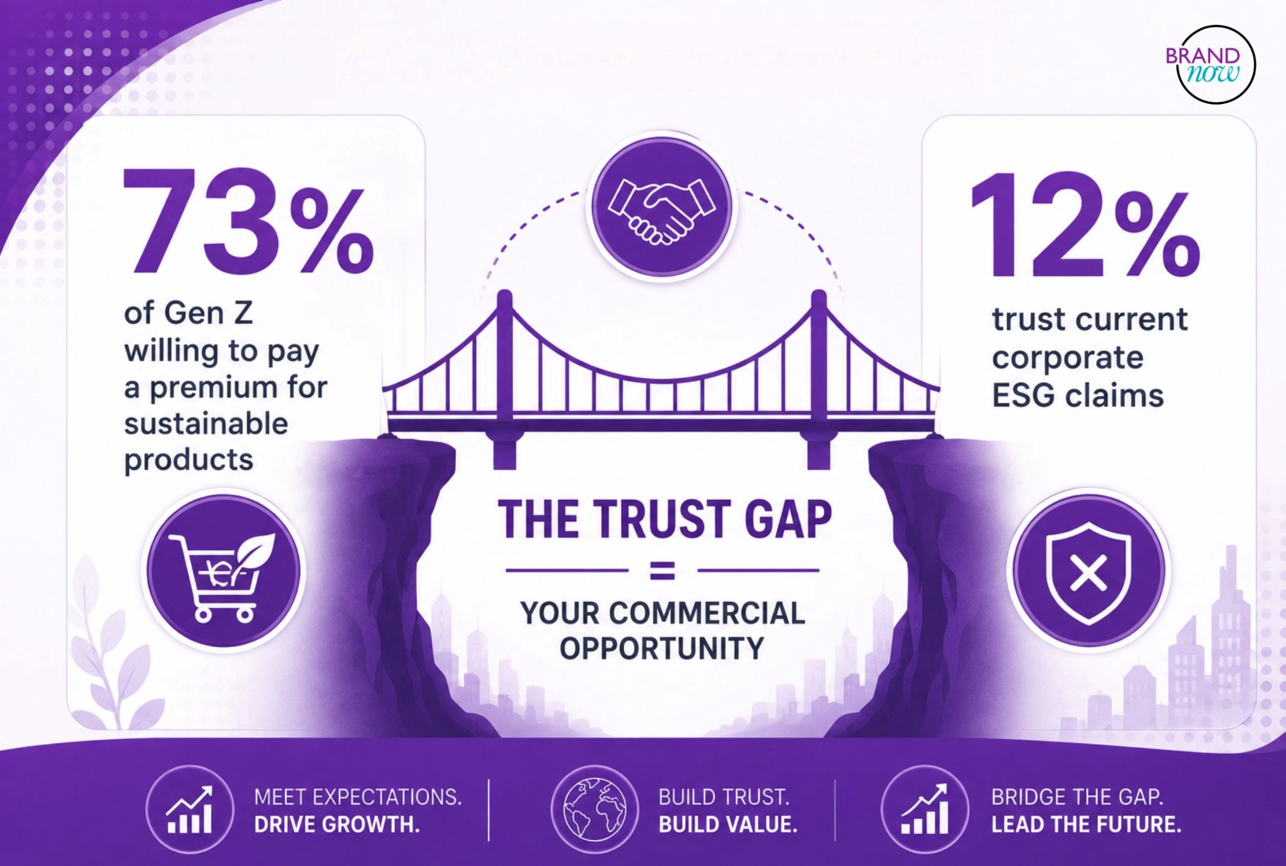
73% of Gen Z will pay more for sustainable products. Only 12% trust the sustainability claims brands are making. That 61-point gap is not a PR problem. It's the biggest open sales opportunity most companies are ignoring. Here's the part most companies get wrong: customers don't buy a 50-page sustainability report. They don't buy the acronym. They buy proof.
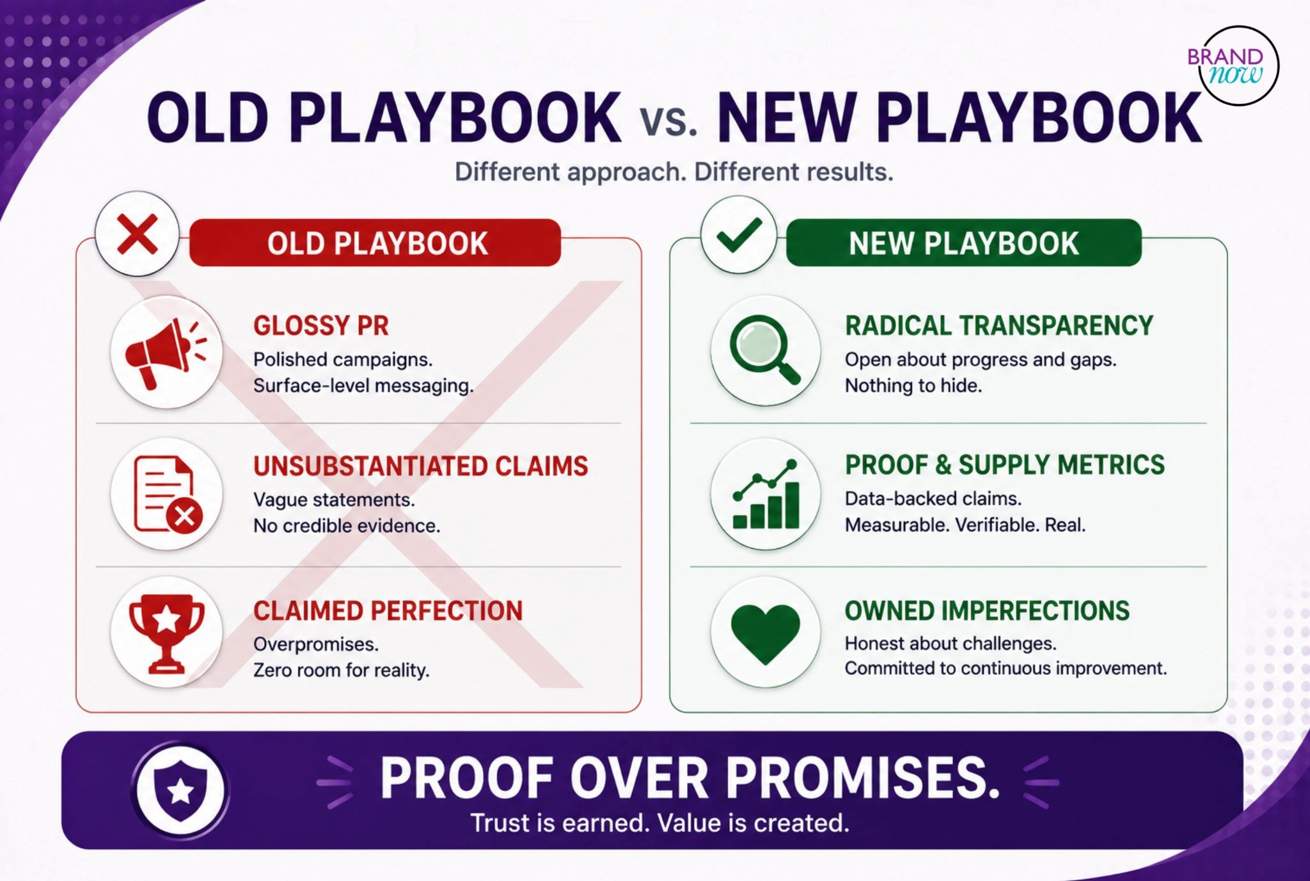
Proof Over Promises

90% of Gen Z and Millennials think brands are lying about sustainability. 57% of that same group actively seeks out sustainable brands anyway. They want what you're selling. They just don't believe you're selling it honestly. For this generation, sustainability isn't a premium feature. It's the baseline. They check your supply chain. They read your Glassdoor reviews. They screenshot your greenwashing and post it before your PR team wakes up.

The Business Case

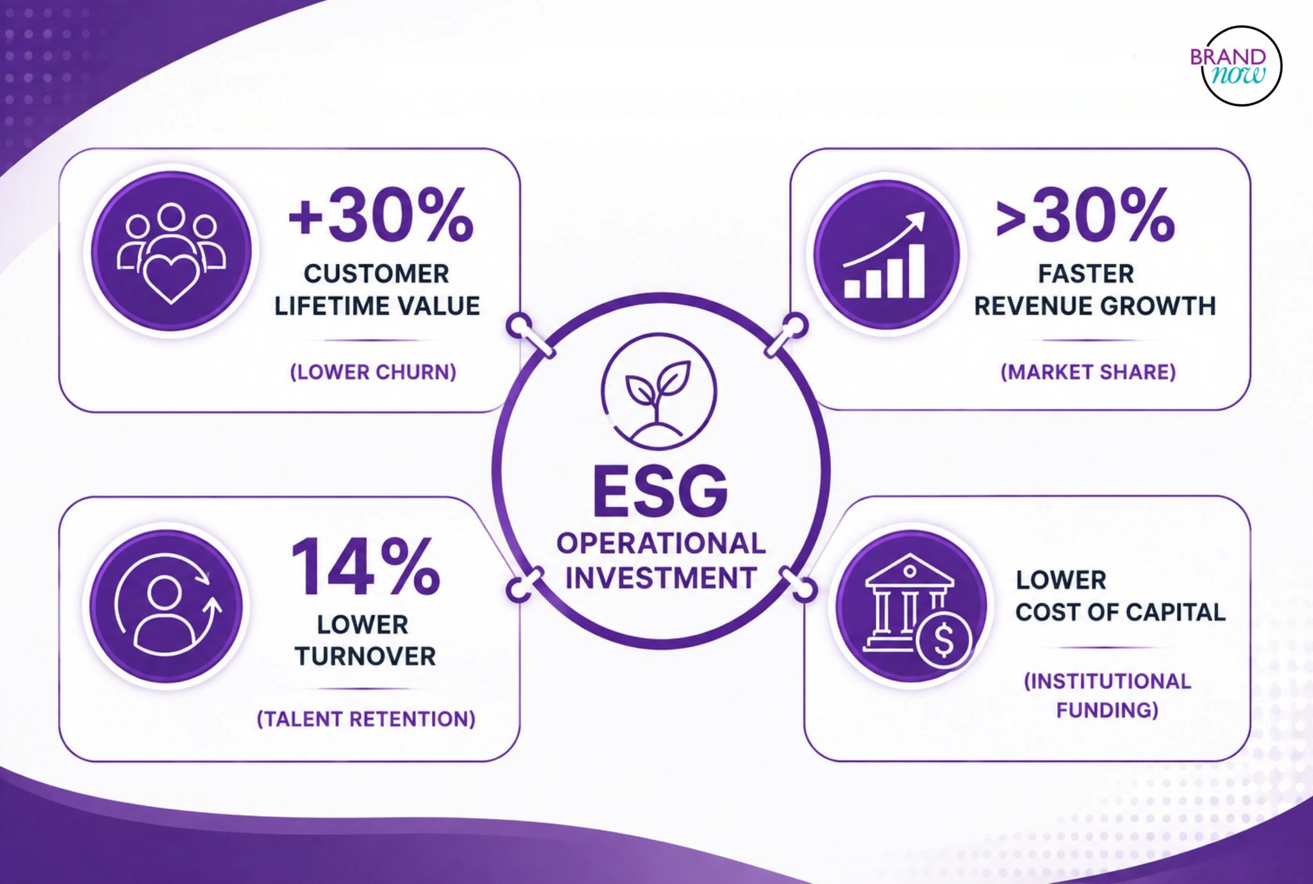
For years, executives filed sustainability under "cost center." The data says the opposite. Companies with strong ESG performance posted 25% higher profit margins over five years than weak-ESG competitors. Revenue growth: over 30% faster, driven by customers who buy on values alignment. Customer lifetime value: up 30%, driven by stronger brand affinity and lower churn. Talent retention: 14% lower turnover, meaning lower recruitment cost. Cost of capital: measurably better financing terms, as institutional capital keeps flowing toward ESG-aligned funds.

Show, Don't Tell

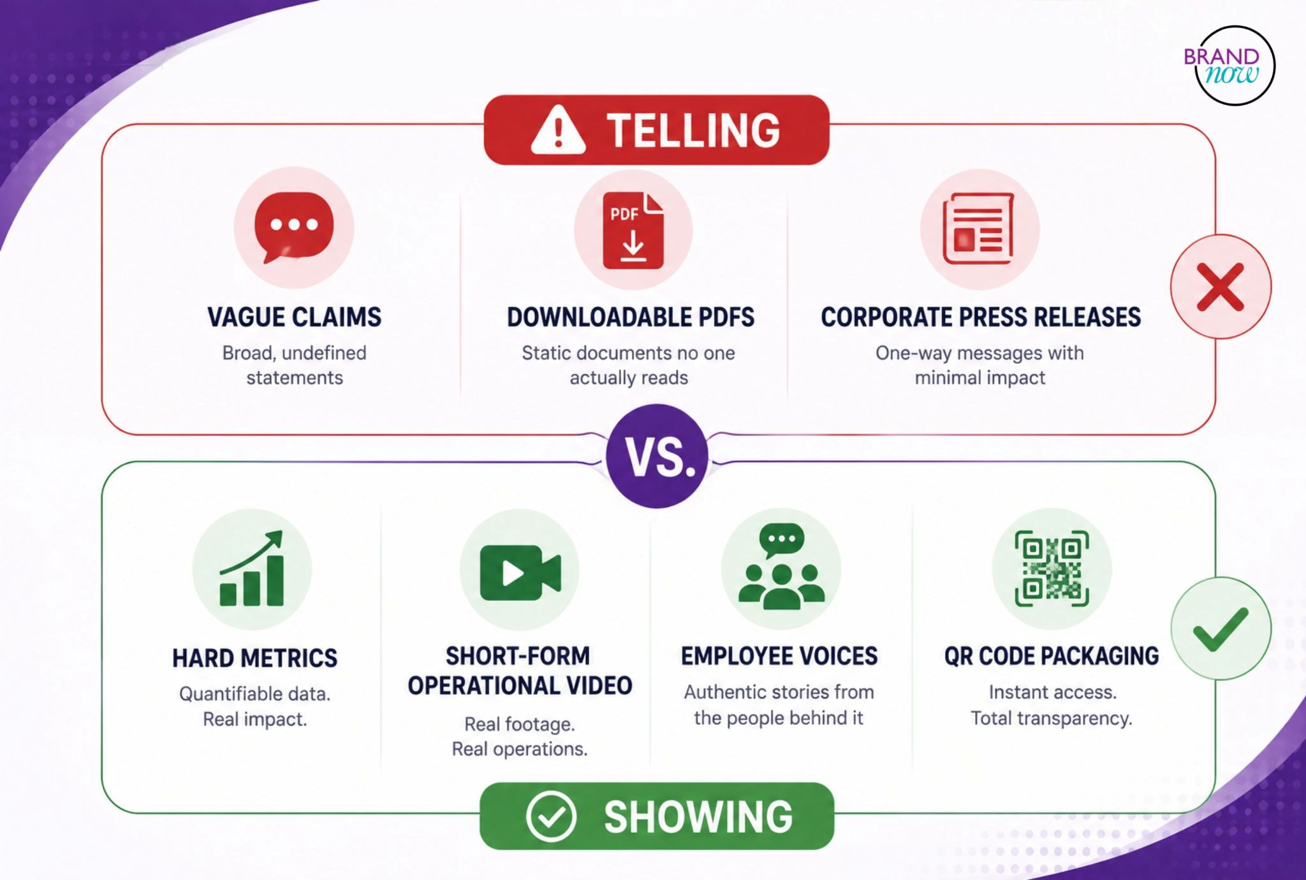
The single biggest mistake in sustainability marketing: talking about commitments instead of showing actions. "We care deeply about the environment" convinces nobody. "We reduced packaging waste by 40% in 18 months" converts.

Which Content Wins

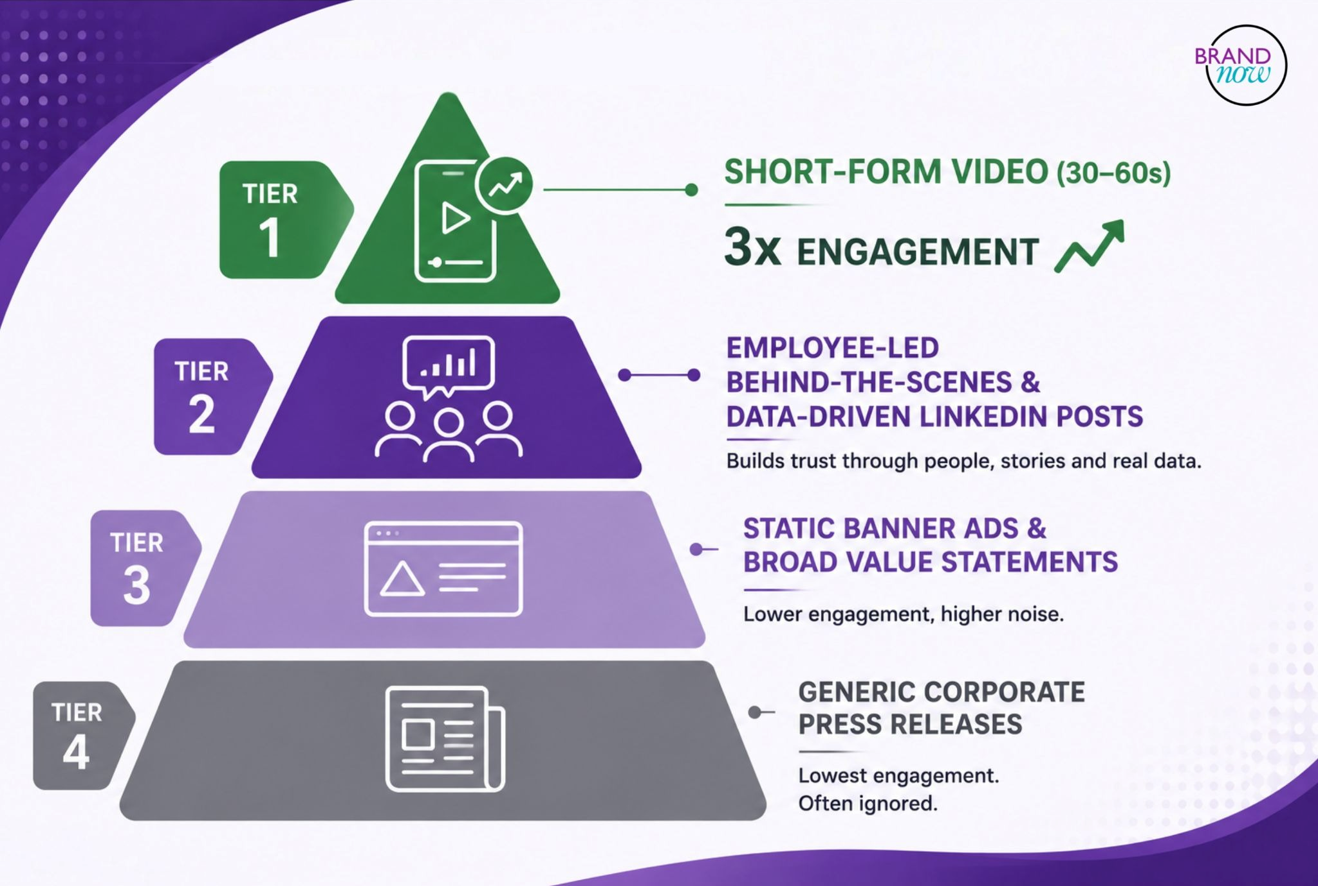
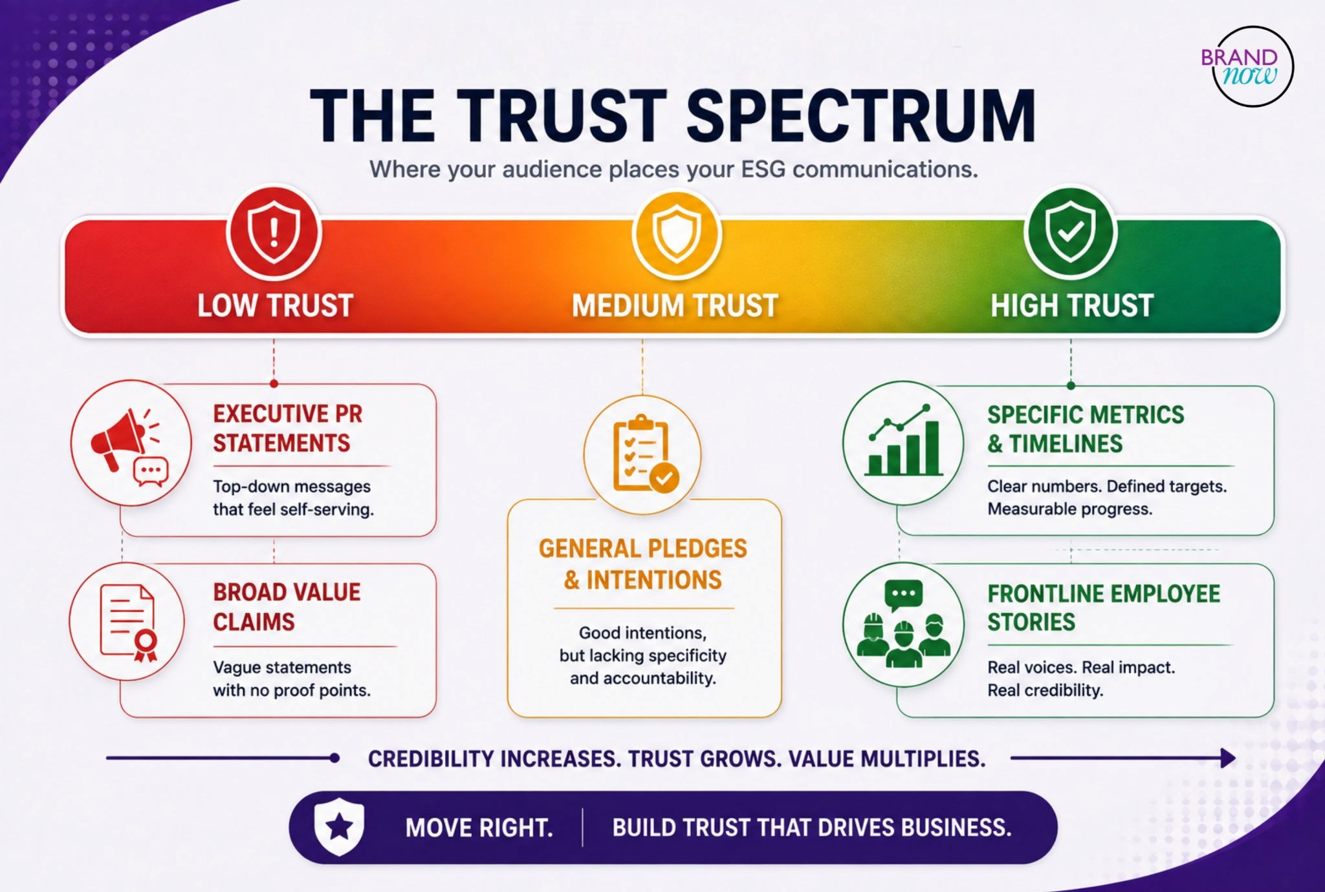
Short-form sustainability video gets 3x the engagement of a static image post. Most companies are still spending their budget on long-form corporate text updates nobody reads. What works: 30 to 60 second video of real facility updates, material testing, or waste-reduction steps. Outperforms expensive commercials. Employee-led testimonials. Frontline staff explaining real operations builds trust faster than any executive statement. Data-first LinkedIn posts. Clean numbers and simple visuals win with corporate decision-makers specifically.

Brands That Won

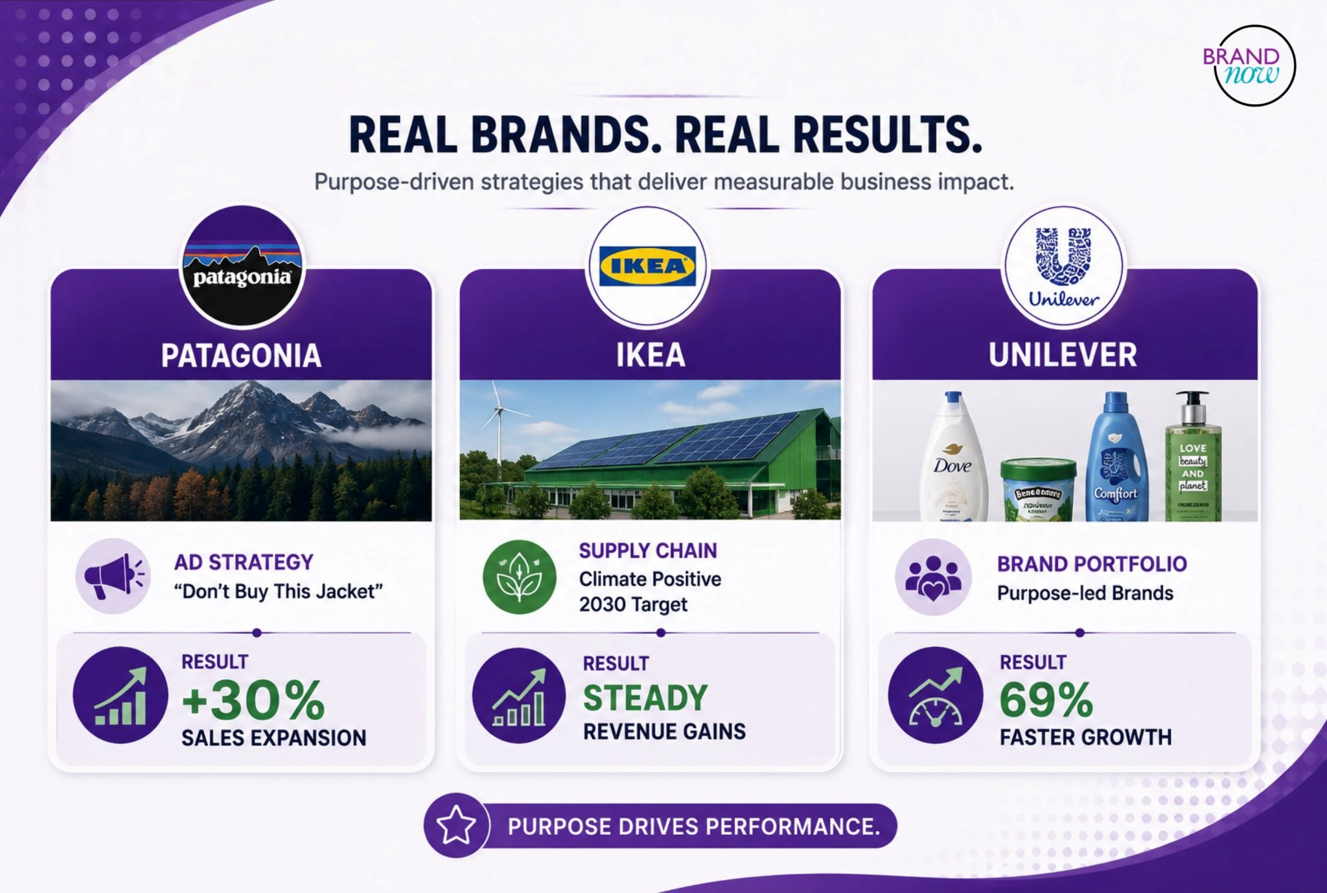
Patagonia ran an ad telling customers not to buy their jacket. Sales grew 30%. Unilever's sustainable brands grew 69% faster than the rest of the company. IKEA backed a 2030 climate target with real infrastructure spend and kept growing revenue the whole way through.

The Cost of Lying

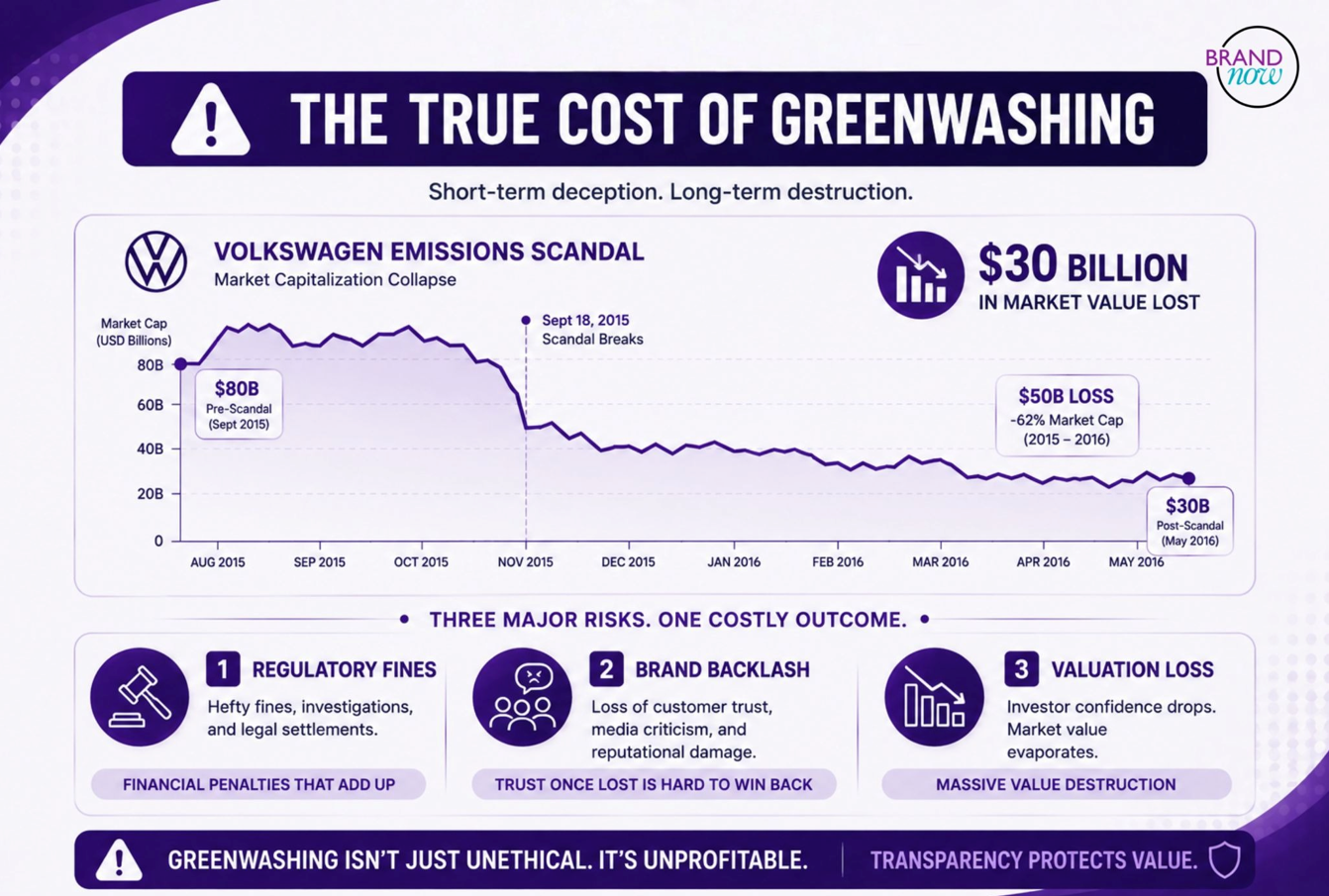
Volkswagen faked emissions data on "clean diesel" vehicles. The fallout: $30 billion in fines, legal costs, and lost market value. Decades of trust gone in months. Volkswagen wasn't the only one. H&M launched a "Conscious Collection" while its core fast-fashion model stayed just as wasteful. Nestlé promoted ethical sourcing while supply chain controversies kept surfacing.

The 90-Day Sprint

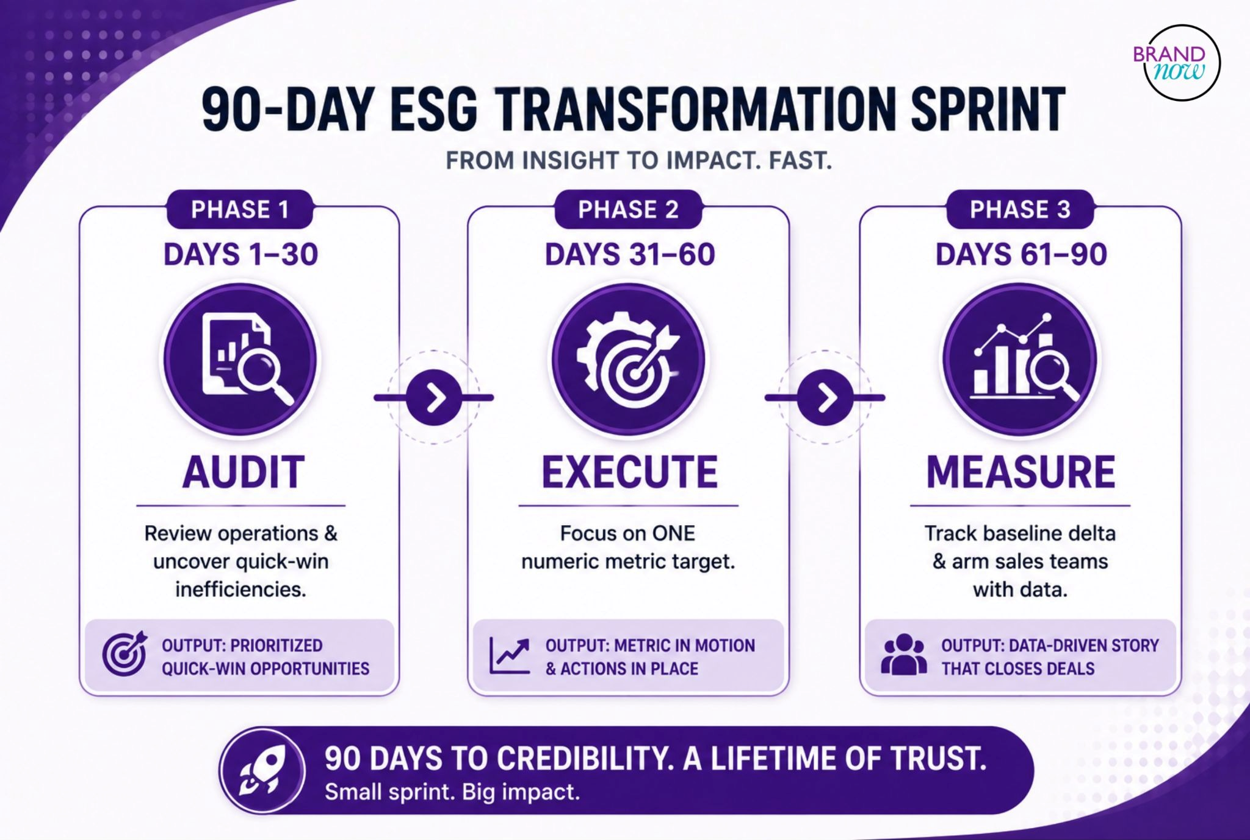
The most common ESG mistake: launching a five-year vision with no short-term proof to back it up. Days 1 to 30: Audit. Review current operations, vendor relationships, and facilities. Find the inefficiencies you can actually move. Days 31 to 60: Focus. Pick one target with a hard number attached.

Making It Stick

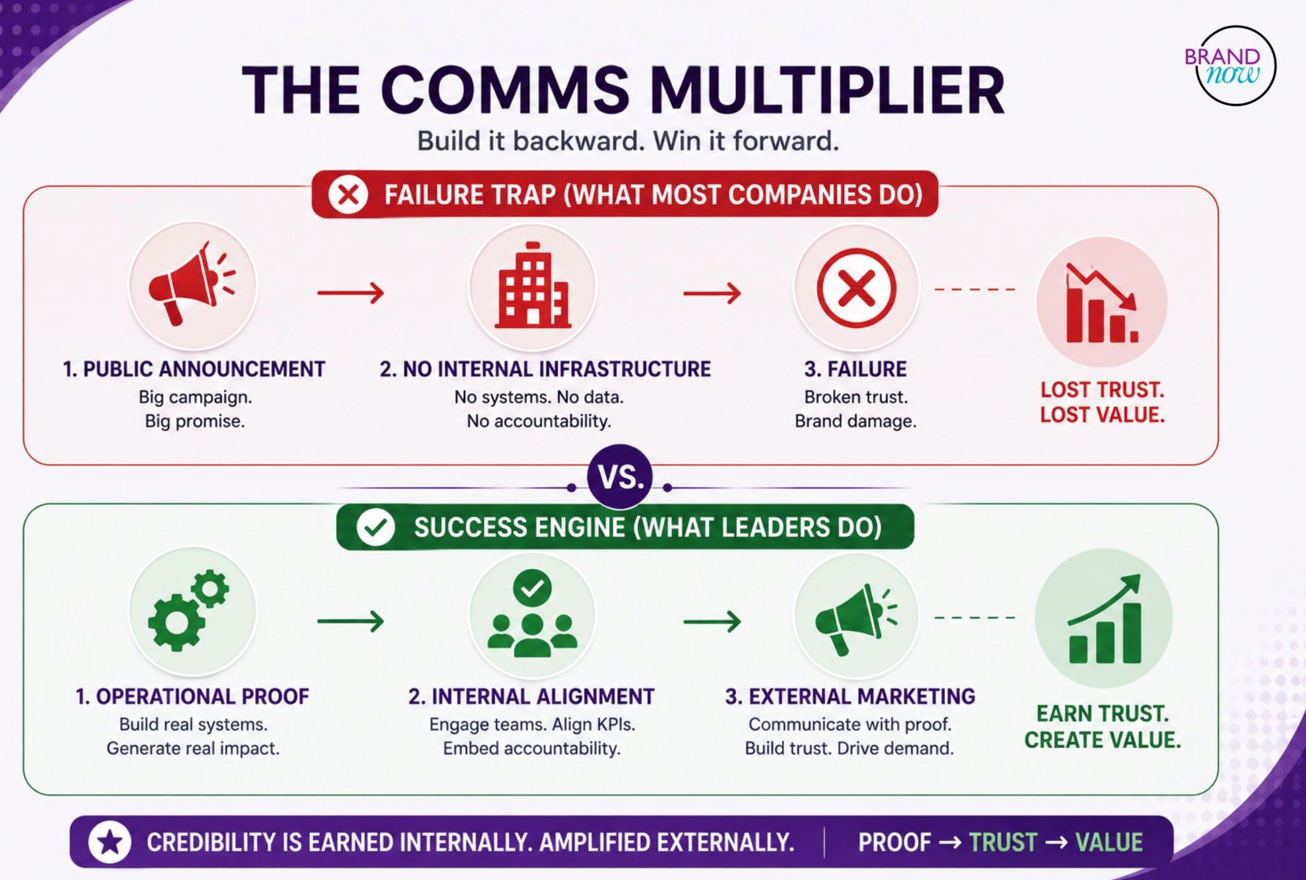
73% of corporate ESG initiatives fail to deliver lasting results. The reason is almost always the same: leadership announces the PR campaign before building the internal systems to support it. The failure pattern: public announcement, then no internal infrastructure, then quiet failure. The model that works: operational proof first, then internal alignment, then external marketing.

Numbers Over Noise

The most trusted brands aren't making the loudest statements. They're publishing the most specific numbers. "We are deeply committed to reducing our environmental footprint" convinces no one. "We reduced single-use plastic packaging by 35% since January across all shipments" does the work for you.

Copyright 2026. All rights reserved.